Overview
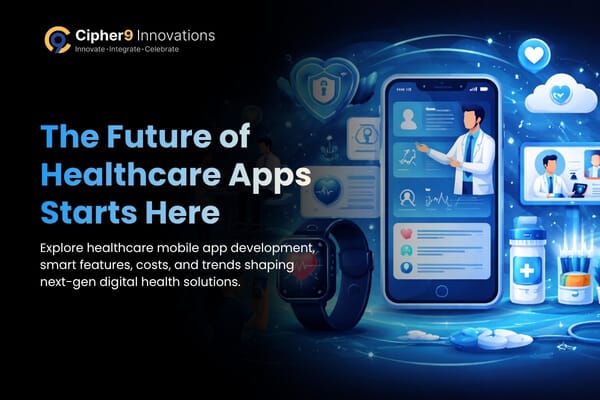
Healthcare is no longer confined to hospital walls—it now lives in the hands of users through smartphones. From virtual consultations to real-time health monitoring, digital health solutions are reshaping how care is delivered and experienced. For businesses, investing in healthcare app development services is not just a technological upgrade—it’s a strategic move toward efficiency, accessibility, and long-term growth.
At Cipher9 Innovations, we believe healthcare apps should do more than function—they should empower patients, streamline provider workflows, and create a connected healthcare ecosystem. Whether you are a startup, hospital, or healthcare enterprise, building the right app can significantly enhance patient engagement and operational performance.
Understanding the Digital Healthcare Ecosystem
The healthcare ecosystem today is interconnected, intelligent, and user-centric. It brings together multiple stakeholders—patients, doctors, hospitals, pharmacies, insurers, and wearable tech providers—through a unified digital platform.
Healthcare mobile app development plays a crucial role in bridging these gaps. Patients can now:
- Book appointments instantly
- Access digital medical records
- Consult doctors remotely
- Receive medication reminders
On the other side, healthcare providers benefit from:
- Centralized dashboards
- Real-time patient monitoring
- Data-driven decision-making
This shift toward digital health is accelerating rapidly, driven by the demand for convenience, speed, and personalized care. Businesses that invest in custom healthcare app development are better positioned to meet these evolving expectations.
Step-by-Step Process of Healthcare App Development
Creating a healthcare app requires a structured and compliant approach. Here’s how successful healthcare software development typically unfolds:
1. Market Research & Ideation
Every successful app begins with identifying real-world problems. Understanding patient pain points, competitor gaps, and market demand ensures your app solves meaningful challenges.
2. Compliance & Requirement Planning
Healthcare apps must comply with regulations such as HIPAA and GDPR. Early planning ensures data privacy, security, and legal adherence, reducing risks later.
3. UI/UX Design
A clean, intuitive interface is essential—especially for elderly users and medical professionals. Accessibility and simplicity should be at the core of design.
4. Development & Integration
Developers build secure backend systems and integrate essential tools like:
- Electronic Health Records (EHR)
- Payment gateways
- Wearable device APIs
- AI-based analytics systems
5. Testing & Quality Assurance
Rigorous testing ensures the app is secure, reliable, and user-friendly. This includes:
- Functional testing
- Security testing
- Performance optimization
6. Deployment & Ongoing Support
Launching the app is just the beginning. Continuous updates, monitoring, and feature enhancements ensure long-term success and compliance.
Essential Features of Modern Healthcare Apps
A successful healthcare app must deliver trust, convenience, and measurable outcomes. Here are the must-have features in today’s digital health applications:
1. Secure Authentication
Data security is critical. Features like biometric login and multi-factor authentication protect sensitive medical information.
2. Telemedicine Integration
Virtual consultations enable patients to connect with doctors anytime, reducing hospital visits and improving accessibility.
3. Real-Time Health Tracking
Integration with wearable devices allows users to monitor vitals such as heart rate, sleep patterns, and activity levels.
4. Appointment Scheduling
Seamless booking and reminders reduce no-shows and improve operational efficiency.
5. EHR Integration
Access to digital health records ensures continuity of care and better clinical decisions.
6. AI-Powered Insights
Artificial intelligence helps in predictive analysis, early diagnosis, and personalized treatment recommendations.
7. Notifications & Alerts
Medication reminders, appointment alerts, and health updates keep users engaged and informed.
Types of Healthcare Apps You Can Build
Healthcare app development services cater to various business models and use cases:
- Telemedicine Apps: Virtual doctor consultations
- Fitness & Wellness Apps: Activity tracking and lifestyle management
- Chronic Disease Management Apps: Monitoring conditions like diabetes or hypertension
- Hospital Management Apps: Streamlining internal operations
- Mental Health Apps: Therapy, meditation, and emotional well-being support
Each category requires a tailored approach to meet user expectations and regulatory standards.
Cost Breakdown of Healthcare App Development
The cost of developing a healthcare app depends on several factors, including complexity, features, and integrations.
Estimated Cost Range:
- Basic App: $40,000 – $80,000
- Mid-Level App: $80,000 – $150,000
- Advanced App: $150,000 – $250,000+
Key Cost Factors:
- Number of features and integrations
- Compliance requirements
- UI/UX complexity
- Development team location
- Maintenance and updates
Advanced features like AI, IoT integrations, and real-time analytics can increase the budget but also significantly enhance the app’s value.
Key Challenges in Healthcare App Development
While the opportunities are vast, healthcare app development also comes with challenges:
- Data Security & Privacy Risks
- Strict Regulatory Compliance
- Integration with Legacy Systems
- User Trust & Adoption
- Scalability Issues
Overcoming these challenges requires expertise, planning, and the right development partner.
How to Choose the Right Healthcare App Development Company
Selecting the right partner can determine your app’s success. Here’s what to look for:
1. Industry Experience
Choose a company with proven expertise in healthcare software development.
2. Technical Proficiency
Ensure they use modern technologies like AI, blockchain, and cloud computing.
3. Compliance Knowledge
A strong understanding of HIPAA, GDPR, and other regulations is essential.
4. Customization Capabilities
Your app should align with your unique business goals and workflows.
5. Scalability & Support
The partner should offer long-term maintenance and scalability solutions.
6. Transparent Communication
Clear timelines, regular updates, and collaborative workflows ensure smooth execution.
Future Trends in Healthcare App Development
The future of healthcare apps is driven by innovation and personalization. Key trends include:
- AI-driven diagnostics and automation
- Blockchain for secure health data sharing
- IoT-enabled remote patient monitoring
- Voice-enabled healthcare assistants
- Personalized treatment through big data analytics
Businesses that adopt these technologies early will gain a competitive edge in the digital health space.
Conclusion
Healthcare app development services are transforming the way care is delivered, managed, and experienced. For businesses, it’s an opportunity to improve patient outcomes, streamline operations, and build long-term trust.
At Cipher9 Innovations, we specialize in creating scalable, secure, and user-centric healthcare solutions tailored to your business needs. From ideation to deployment and beyond, our expert team ensures your app not only meets industry standards but exceeds user expectations.
If you’re ready to build a healthcare app that drives real impact, now is the time to take the next step toward digital transformation.