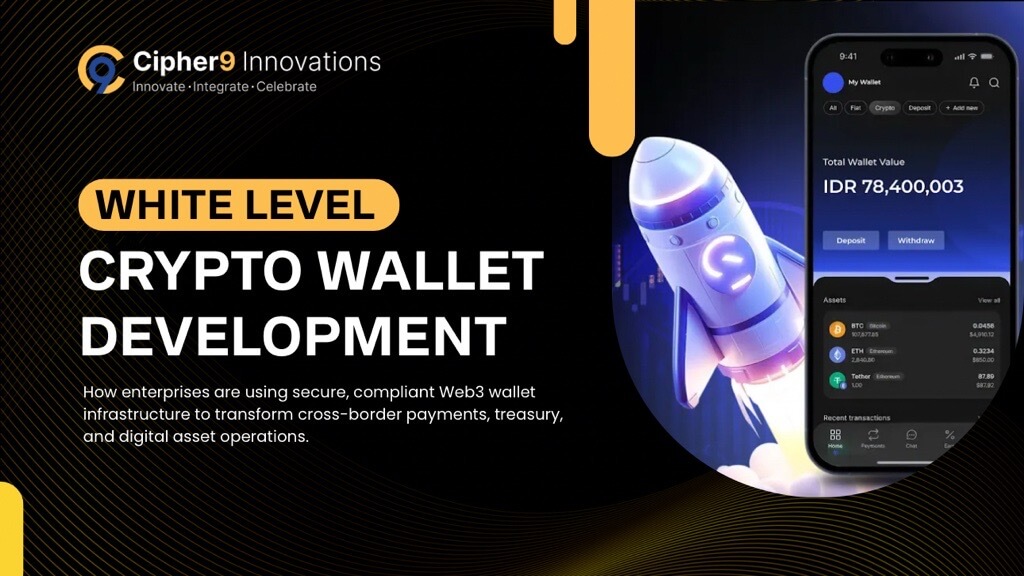
Introduction: The Shift in Enterprise Finance
Enterprise finance is undergoing a structural transformation. Digital assets are no longer experimental tools used only by early adopters. They are becoming core infrastructure for modern B2B operations.
In 2024 alone, stablecoin transfer volumes crossed $27 trillion, while global crypto users exceeded 650 million. These numbers are not driven by speculation alone. They reflect a growing reliance on blockchain-based payments, treasury management, and settlement systems.
For B2B businesses, the question is no longer whether to support crypto—but how to do it securely, compliantly, and at scale. This is where white-label crypto wallet development for B2B businesses becomes non-negotiable.
Market Growth and Rising B2B Crypto Demand
The crypto wallet market is expanding rapidly. Industry projections estimate growth from $12.6 billion in 2024 to over $100 billion by 2033, driven largely by enterprise adoption.
At the same time, global B2B payments exceed $150 trillion annually, with a significant portion tied to cross-border transactions. Traditional banking rails remain slow, expensive, and fragmented. Blockchain-based wallets offer a clear alternative—instant settlement, reduced fees, and improved transparency.
Regions such as North America, India, Southeast Asia, and Europe are seeing strong enterprise-level adoption. Stablecoins, in particular, are emerging as the preferred settlement layer for B2B transactions due to price stability and regulatory clarity.
Core B2B Payment and Treasury Challenges
Despite technological progress, many B2B businesses still rely on outdated financial systems. These challenges create operational friction and limit growth:
Slow Cross-Border Payments
International bank transfers can take days, locking up working capital and delaying settlements.
High FX and Processing Costs
Currency conversions, intermediary banks, and payment processors add unnecessary expense.
Fragmented Payment Infrastructure
Multiple systems for ACH, SWIFT, cards, and reconciliation create inefficiencies and errors.
Compliance Complexity
Managing KYC, AML, and jurisdiction-specific regulations across borders is resource-intensive.
Security and Fraud Risk
High-value B2B transactions are prime targets for fraud, chargebacks, and credential theft.
Technology Barriers
Building a secure crypto wallet in-house requires deep blockchain expertise, long timelines, and high costs.
These challenges explain why many enterprises struggle to adopt crypto—even when demand exists.
How White-Label Crypto Wallets Solve B2B Challenges
White-label blockchain wallet solutions provide a ready-made, enterprise-grade foundation that directly addresses these pain points.
Faster Time to Market
White-label platforms can be deployed in weeks instead of months or years. Businesses avoid building wallet infrastructure from scratch.
Full Brand Ownership
The wallet operates entirely under the company’s brand—UI, onboarding, and user experience remain fully controlled.
Multi-Asset and Multi-Chain Support
Support for major blockchains and stablecoins enables instant global settlement without FX complexity.
Built-In Compliance Modules
KYC, AML, transaction monitoring, and reporting tools are integrated from day one, reducing regulatory risk.
Enterprise-Grade Security
Security features such as MPC key management, cold storage, and role-based access controls are included by default.
Operational Integration
APIs and dashboards allow seamless integration with ERP, accounting, and treasury systems.
Rather than acting as standalone tools, white-label wallets become part of a broader B2B Web3 payment infrastructure.
Essential Security Features for B2B Crypto Wallets
Security is non-negotiable for enterprise crypto adoption. A robust white-label wallet must include:
- Multi-Party Computation (MPC) to eliminate single points of failure
- Hardware Security Modules (HSMs) for key protection
- Cold Storage Options for large balances
- Role-Based Access Controls for internal teams
- Transaction Whitelisting and Limits to prevent fraud
- Audit Logs and Compliance Reporting for governance
These measures ensure that crypto operations meet or exceed traditional financial security standards.
Industry Use Cases for B2B White-Label Wallets
White-label crypto wallet solutions apply across multiple industries:
Financial Services and Fintech
Banks and payment providers can offer crypto custody and stablecoin payments under their own brand.
Payment Platforms and SaaS Providers
Embedded wallets allow partners and vendors to settle transactions on-chain.
Retail and Loyalty Programs
Tokenized rewards and blockchain-based loyalty wallets improve customer engagement.
Travel, Telecom, and Super Apps
Crypto-enabled wallets support global users without banking friction.
Logistics and Supply Chain
Stablecoin settlements reduce delays in international supplier payments.
Enterprise Payroll and Remittances
Global payouts become faster, cheaper, and more transparent.
Each use case benefits from customization, compliance, and brand ownership.
Real-World Adoption Examples
Large platforms are already adopting wallet-based infrastructure to streamline payments and improve user experience.
In Southeast Asia, super apps have enabled crypto-to-fiat wallet functionality, allowing users to pay merchants directly. At the enterprise level, major technology firms now use on-chain payments to settle vendor invoices—demonstrating that crypto wallets are viable for high-volume B2B operations.
These examples reinforce one point: wallet infrastructure is becoming the backbone of digital commerce.
Why the Right Technology Partner Matters
Launching a white-label crypto wallet is not just a technical project. It requires expertise in:
- Blockchain architecture
- Security engineering
- Regulatory compliance
- Enterprise system integration
This is where experienced Web3 development partners add value—by handling complexity while businesses focus on growth.
Cipher9 Innovations specializes in enterprise-grade crypto wallet development, combining deep blockchain engineering with compliance-aware design. Rather than offering generic solutions, the focus is on building scalable, secure, and future-ready wallet infrastructure tailored to B2B needs.
Conclusion
White-label crypto wallet development for B2B businesses is no longer optional. As digital assets reshape payments, treasury, and global commerce, enterprises need infrastructure that is secure, compliant, and scalable.
White-label wallets provide the fastest and most effective path forward—eliminating cross-border friction, reducing costs, and enabling new revenue opportunities. Businesses that invest in wallet infrastructure today will be better positioned to compete in the evolving Web3 economy.
The future of B2B finance is programmable, borderless, and on-chain. Enterprises that act now will lead tomorrow.